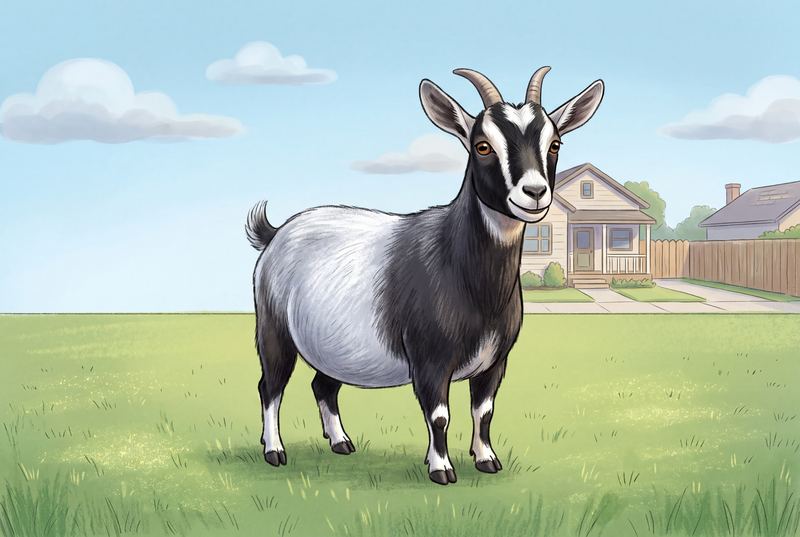
Daisy was a pet goat.
She was a little one — no taller than a grown-up’s knee — with a black face, two white stripes down it, and a silvery back like a small grey cloud.
She lived in town, with a family, in a yard with a soft green lawn.
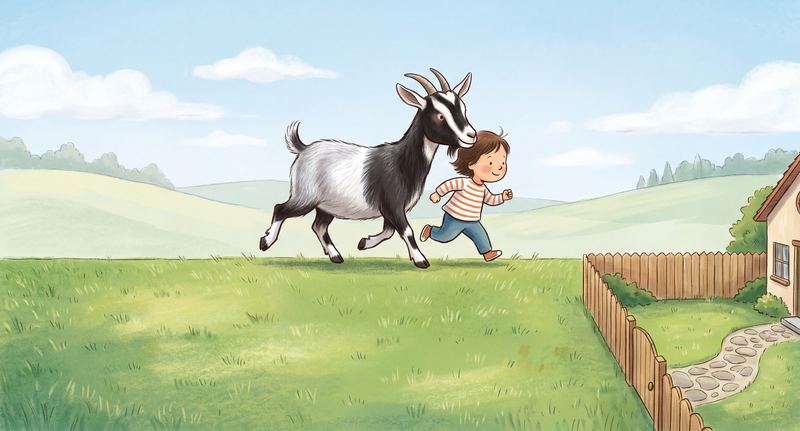
Every day, Daisy played with the boy.
They ran. They hopped. They flopped down in the shade.
Daisy thought the whole wide world was that yard.
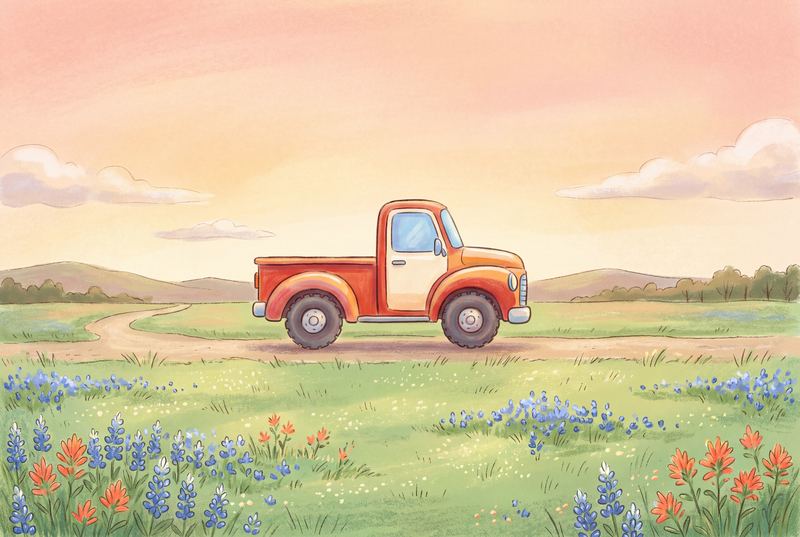
Then one day, Daisy went for a ride.
Down a long road. Around a bend. Over a bump, bump, bump.
And when the door swung open—
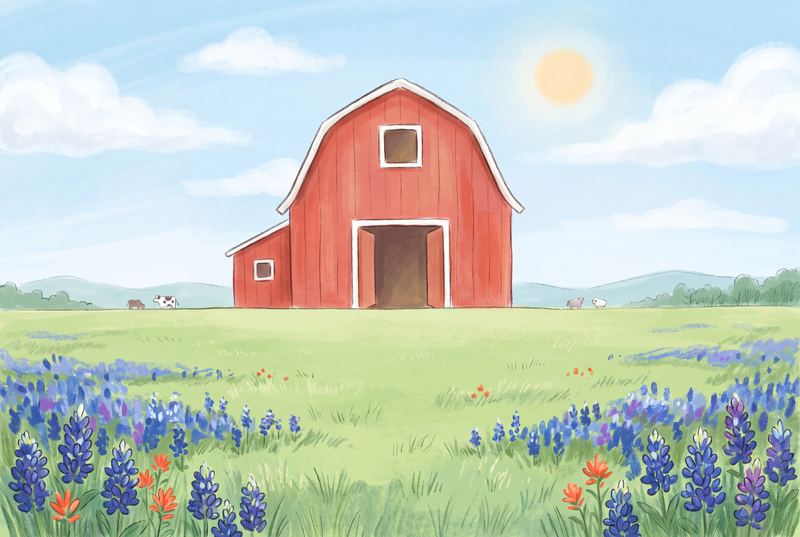
—there was the farm.
Daisy had never seen a farm before.
Everywhere she looked, there was somebody new.
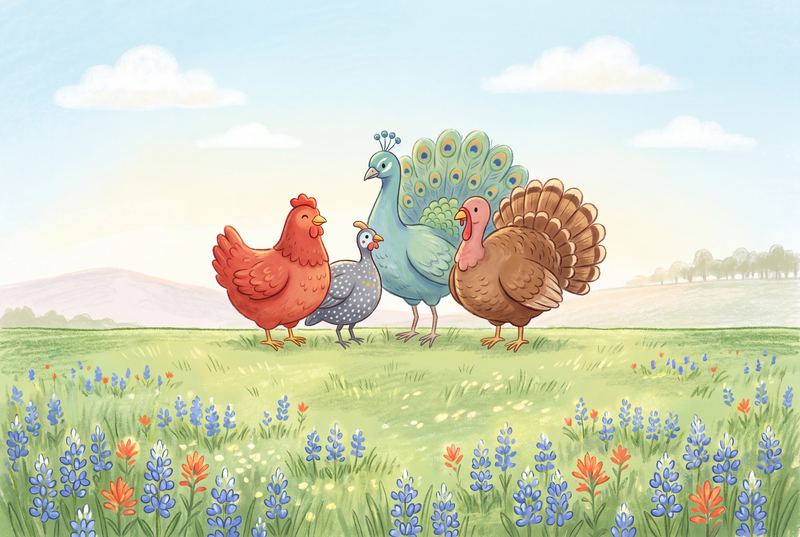
Chickens, scratching in the dust.
Guineas, hollering all at once.
Peacocks, dragging tails like fans.
Turkeys, puffed up round as barrels.
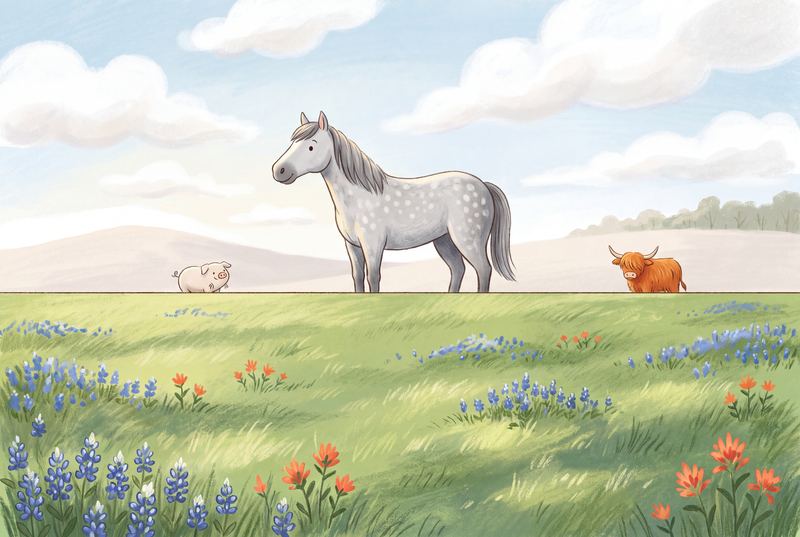
Horses, tall as the sky.
Pigs, snoring in the cool brown mud.
Cows, chewing and chewing and chewing their cud.
Daisy’s eyes got wider and wider.
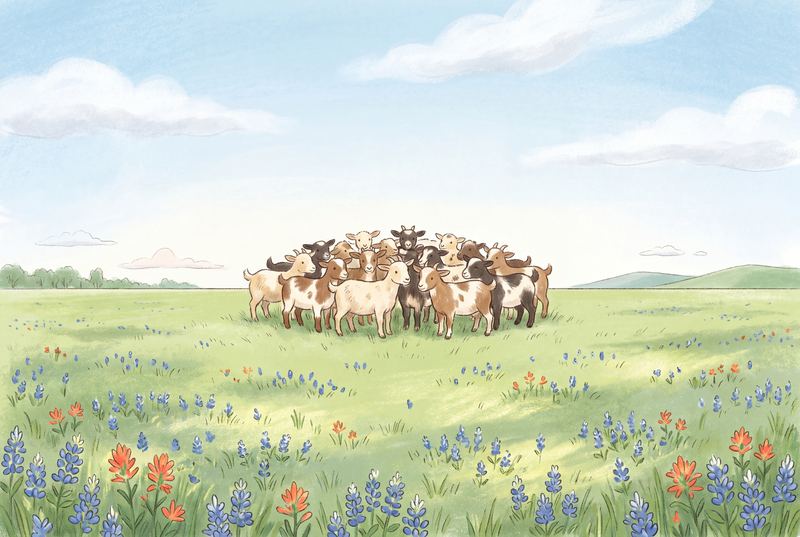
And then Daisy saw them.
Goats.
A great big herd of little Nigerian Dwarf goats, just like her.
More goats than she could count.
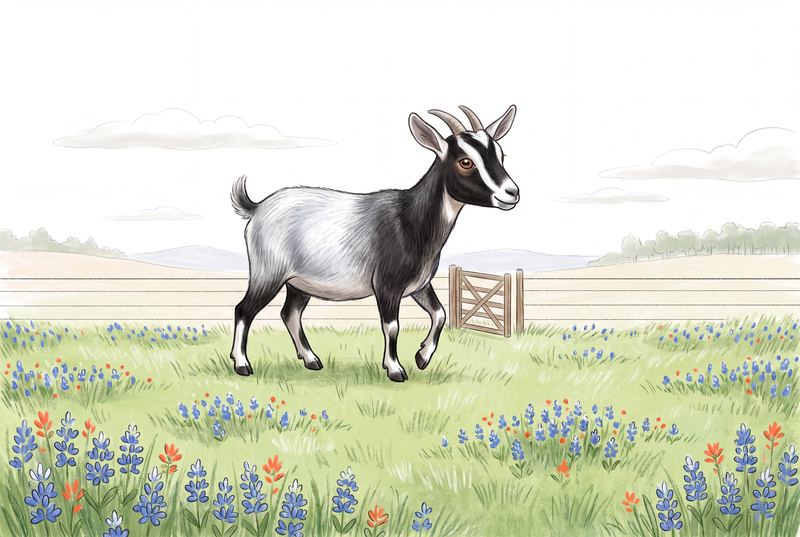
Daisy took one step.
Then another.
Then she walked right in through the gate.
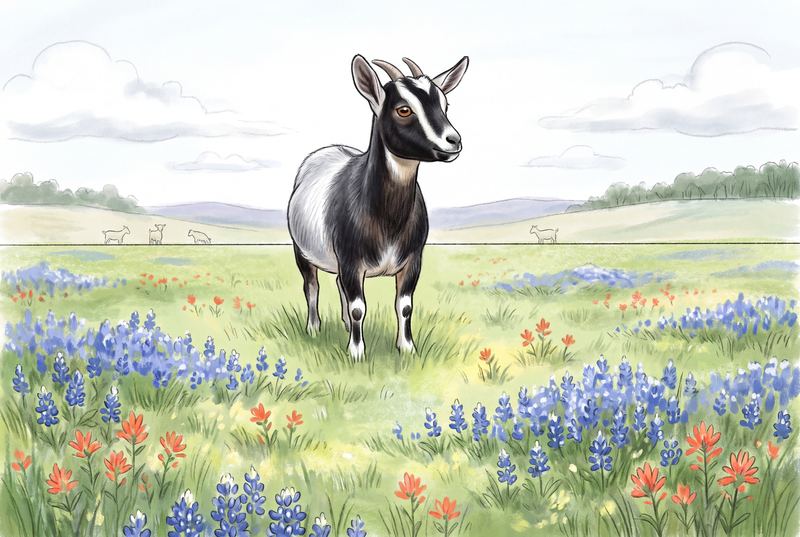
The goats looked at Daisy.
Daisy looked at the goats.
Nobody said a word.
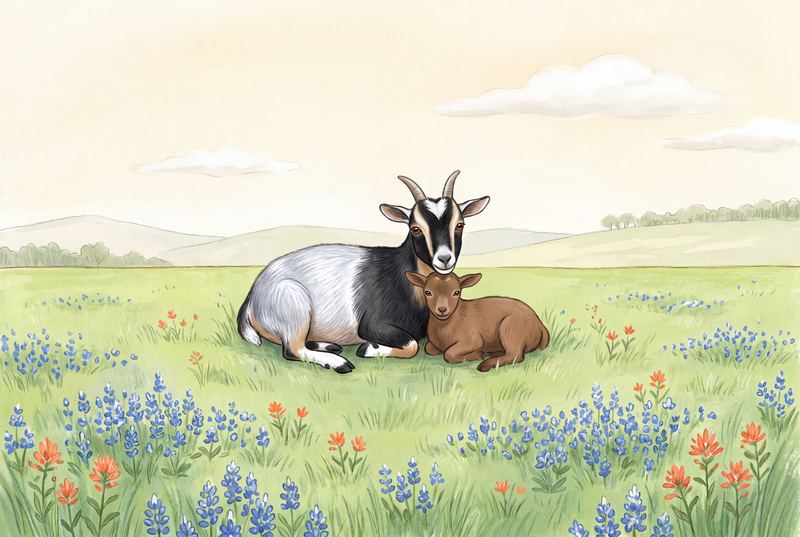
So Daisy waited.
Little by little. Day by day.
A sniff. A nibble. A nap beside somebody new.
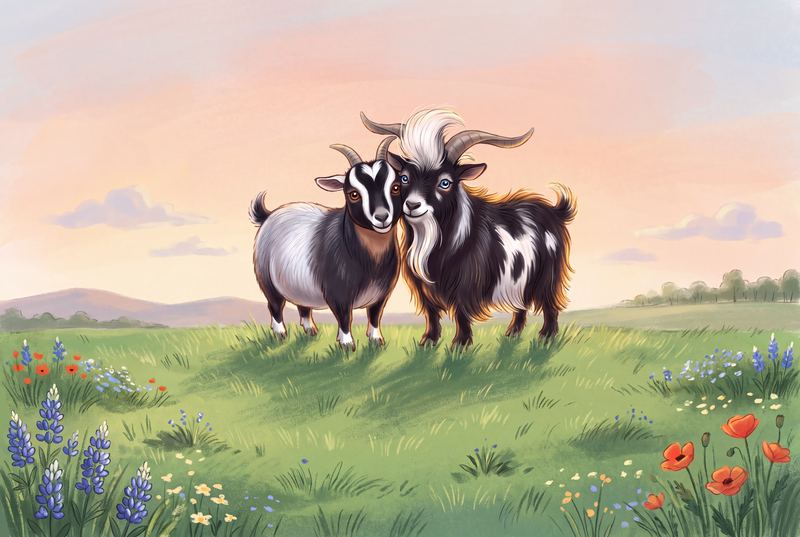
One goat came closer than all the rest.
His name was Elvis.
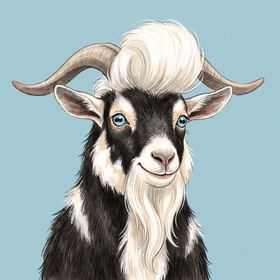
Elvis was shaggy and black and white, with a great white pompadour swept back between two big curling horns.
He had a long white beard that swung when he walked.
Elvis had blue eyes.
Elvis was very kind. Elvis was also very handsome.
(Elvis knew it.)
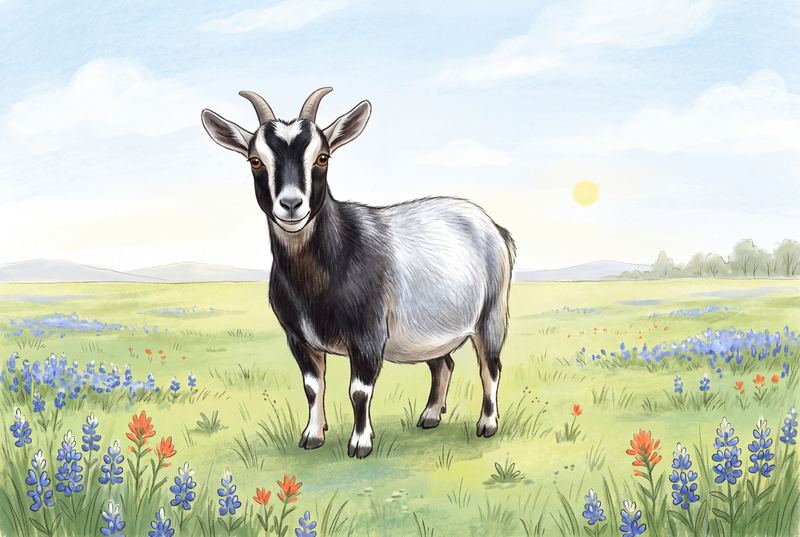
And that is how Daisy stopped being the new goat
and started being a farm goat.
Farm goats have important work to do.
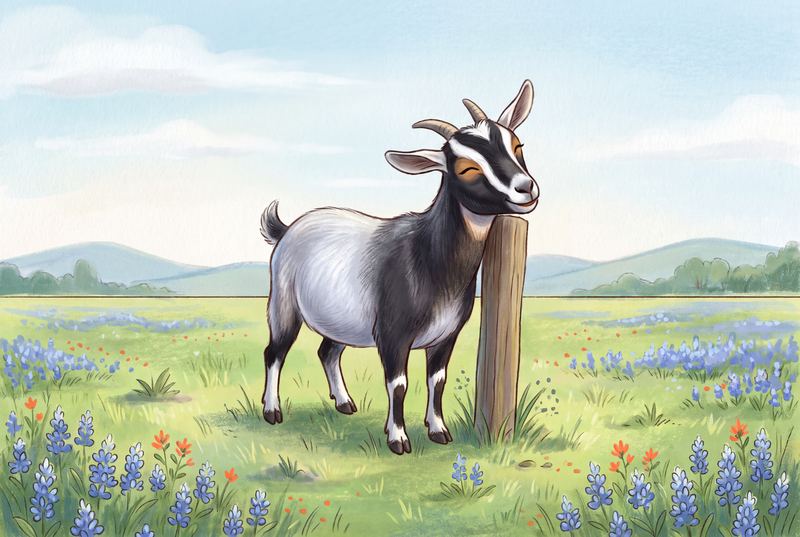
She ate hay when she wanted hay.
She ate grass and weeds when she wanted grass and weeds.
She napped in the cool blue shade.
She scratched her itchy back on a fence post.
Scritch. Scratch. Scritch.
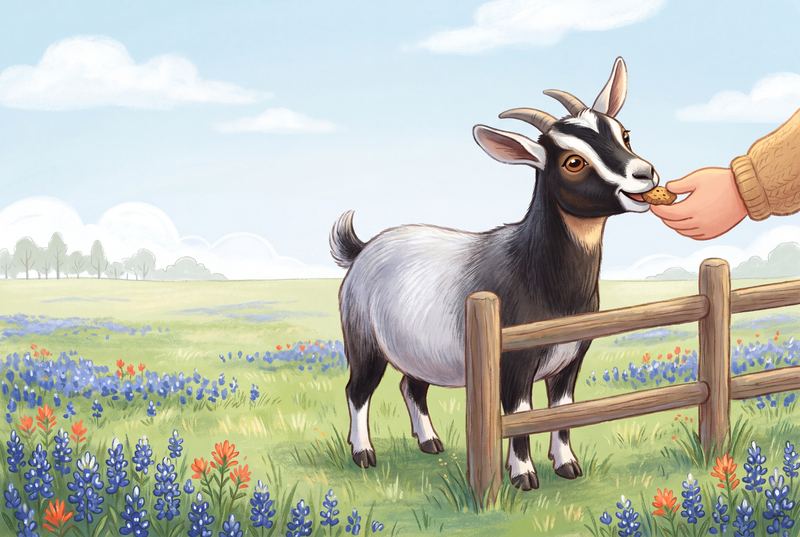
When visitors came, Daisy got treats.
When the farmer came, Daisy got cookies.
Daisy loved treats.
Daisy loved cookies.
But the very best part of the whole day
happened twice.
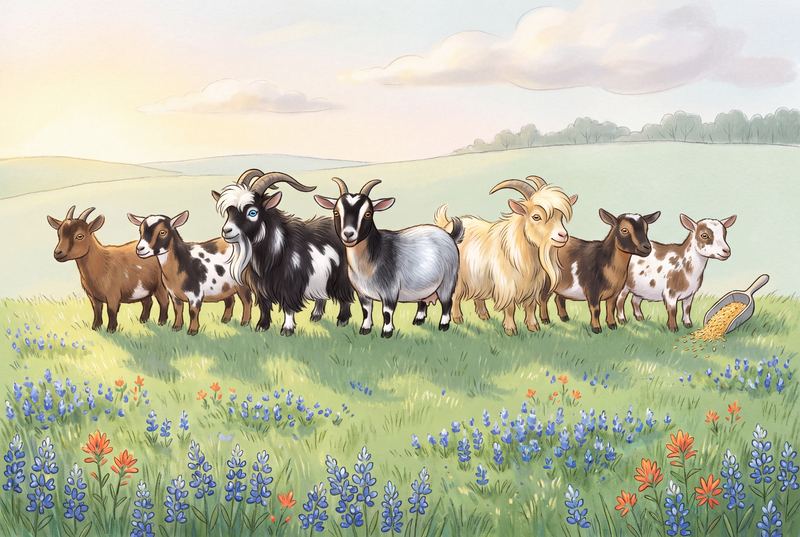
Every morning and every night,
the goats lined up — Daisy right in the middle —
and the farmer came with a big scoop of feed.
Scoop! Scoop! Scoop!
The best part of the whole day.
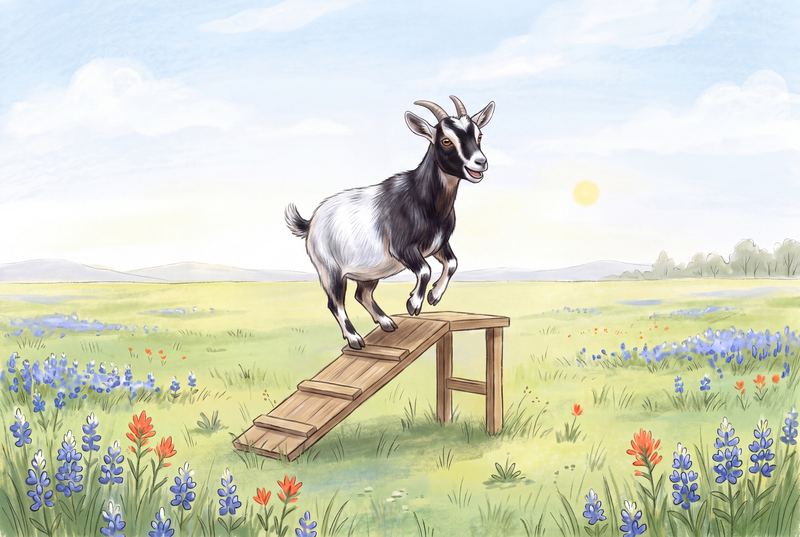
And when the work was done, Daisy played.
Up the ramp. Over the top. Down the other side.
Jump!
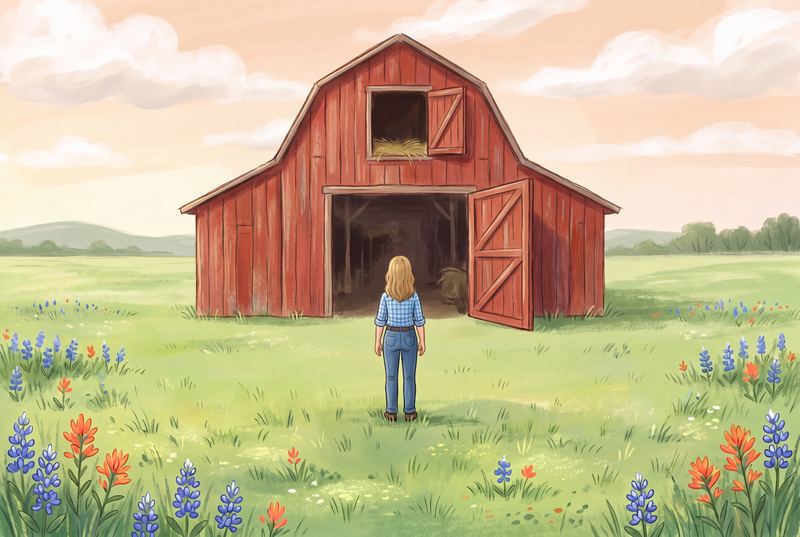
Then, one morning in spring,
the farmer opened the barn door
and stopped
still.
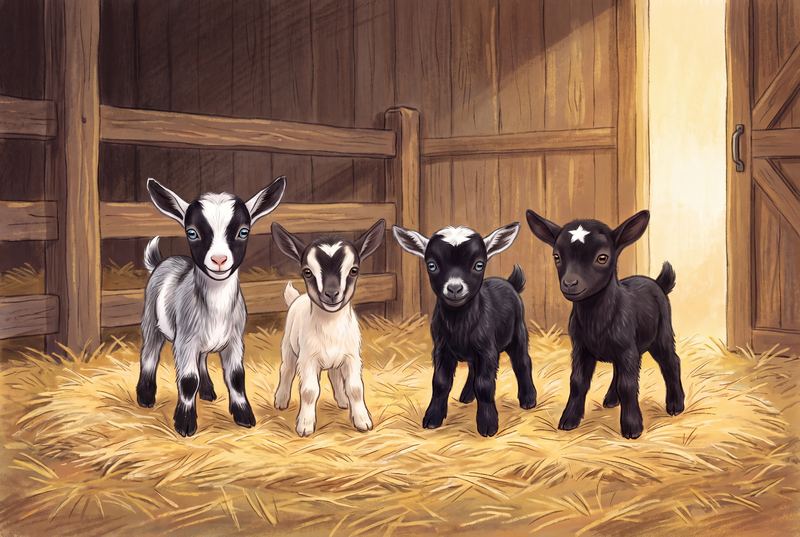
One kid.
Two kids.
Three kids.
FOUR kids.
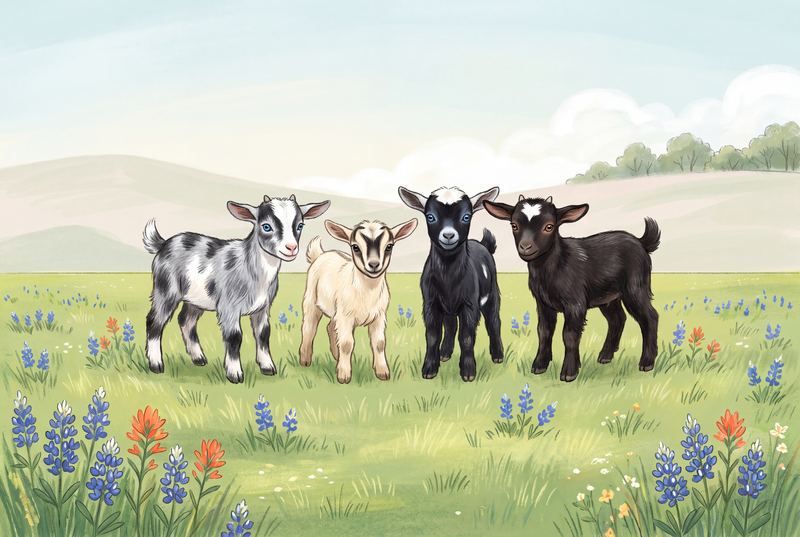
Two girls: Thelma and Louise.
Two boys: Hank and Willie.
Two with blue eyes. Two with brown.
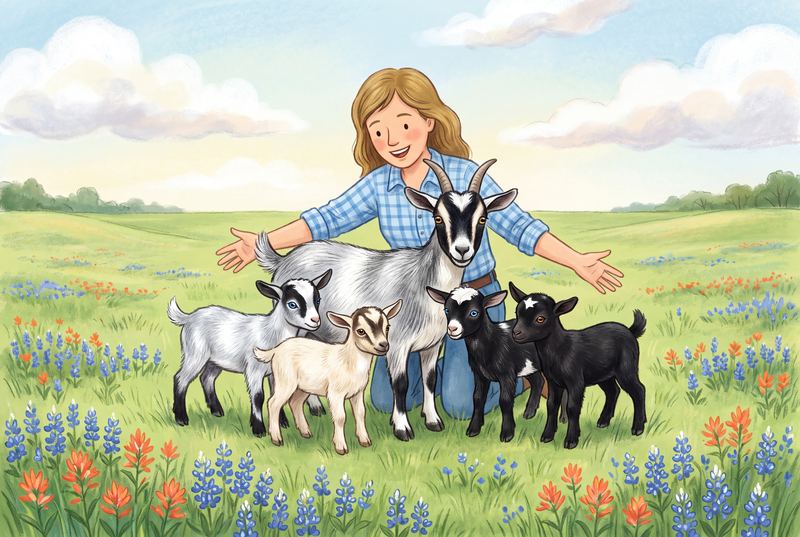
The farmer had never seen a nanny goat have four babies before.
Not once. Not ever.
“Well,” said the farmer. “That is spectacular.”
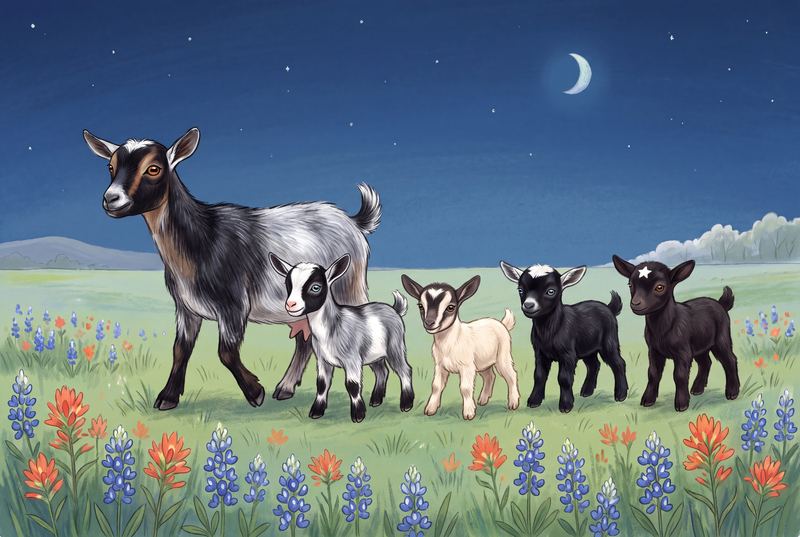
That night, the goats lined up for feed,
and behind Daisy there were four small shadows,
wobbling along on four sets of brand-new knees.
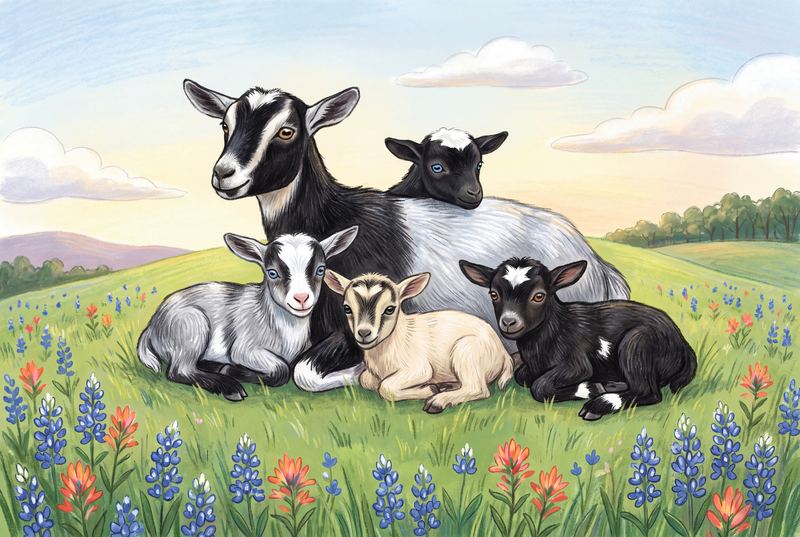
Daisy was a pet goat once.
Now she is a farm goat, and a friend,
and a mama of four.
And every part of the day is the best part of the whole day.
Nine true things about goats
For reading out loud after the story, when somebody asks a question.
Goats have rectangle eyes
Look closely at a goat. The black part in the middle of the eye is not a round dot — it is a little rectangle lying on its side. It helps a goat see almost all the way around itself without turning its head, even while it is eating.
Some goats have blue eyes
Nigerian Dwarf goats are one of the only kinds of goat that can have bright blue eyes. Elvis, Thelma and Hank have blue eyes. Daisy, Louise and Willie have brown ones.
Goats have no top front teeth
Feel your top front teeth with your tongue. A goat does not have any up there. It has a smooth hard pad instead, and it pinches leaves against its bottom teeth to pull them off.
A goat chews its food twice
A goat swallows its food, and then later brings it back up to chew all over again. That mouthful is called cud. Chewing cud is a goat’s favourite way to rest.
Babies are called kids
A baby goat is a kid. A mama goat is a doe, or a nanny. A papa goat is a buck, or a billy. So Daisy is a doe, Elvis is a buck, and Thelma, Louise, Hank and Willie are kids.
Kids can walk right away
Most baby goats stand up on their wobbly legs and start walking about an hour after they are born. By the next day they are already trying to jump.
Nigerian Dwarf goats stay small
They are little their whole lives. A full-grown Nigerian Dwarf only comes up to about a grown-up’s knee — small enough for a grown-up to pick up and carry.
Goats do not eat tin cans
That is just a story. Goats are picky. They nibble at things to find out what they are, then spit out anything they do not like. What they really love is hay, leaves, weeds — and a big scoop of feed.
Four is a whole lot of babies
Most mama goats have one or two babies at a time. Sometimes three. Four all at once is a great big surprise for one small mama.
The goats of this book
Every one of them is a real Nigerian Dwarf goat living at Blue Dragon Hollow.
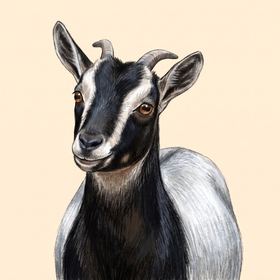
Mama
Daisy
Black face with two white stripes down it, a silvery-white back and barrel, black legs with little white socks, and small horns that sweep back. She used to be a pet in town.
Brown eyes
Papa
Elvis
Big and shaggy, black with a great white pompadour swept back between his horns, a long white beard, white patches down both sides, and two large horns that curl back over his head. Very kind. Very handsome. Aware of both.
Blue eyes
Kid
Thelma
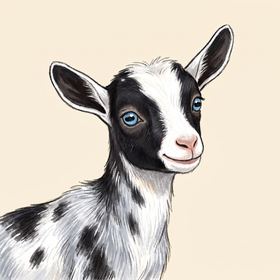
Silver and black, with a wide white blaze straight down the middle of her face and tall black ears rimmed with white. First one out the barn door.
Blue eyes
Kid
Louise
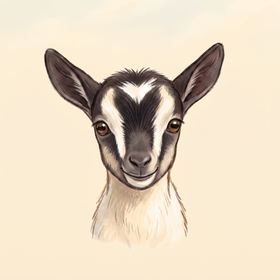
Creamy white nearly all over, with a dark face striped in white and dark upright ears. Never far from Thelma.
Brown eyes
Kid
Hank
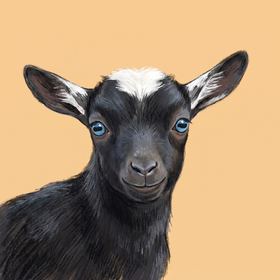
Black, with a little white cap between his ears and white markings on his ears. Fastest up the ramp.
Blue eyes
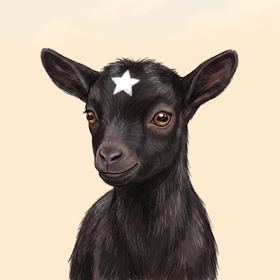
Kid
Willie
Black all over, with one small white star on his forehead. Last in line, first at the feed.
Brown eyes
The story is free. The goats are not.
Read Daisy’s story here as many times as you like — that part’s on us.
A printed copy is a good thing to carry home from a visit, or to hand to a small person
who has recently become very interested in goats. Proceeds go into the feed bin.